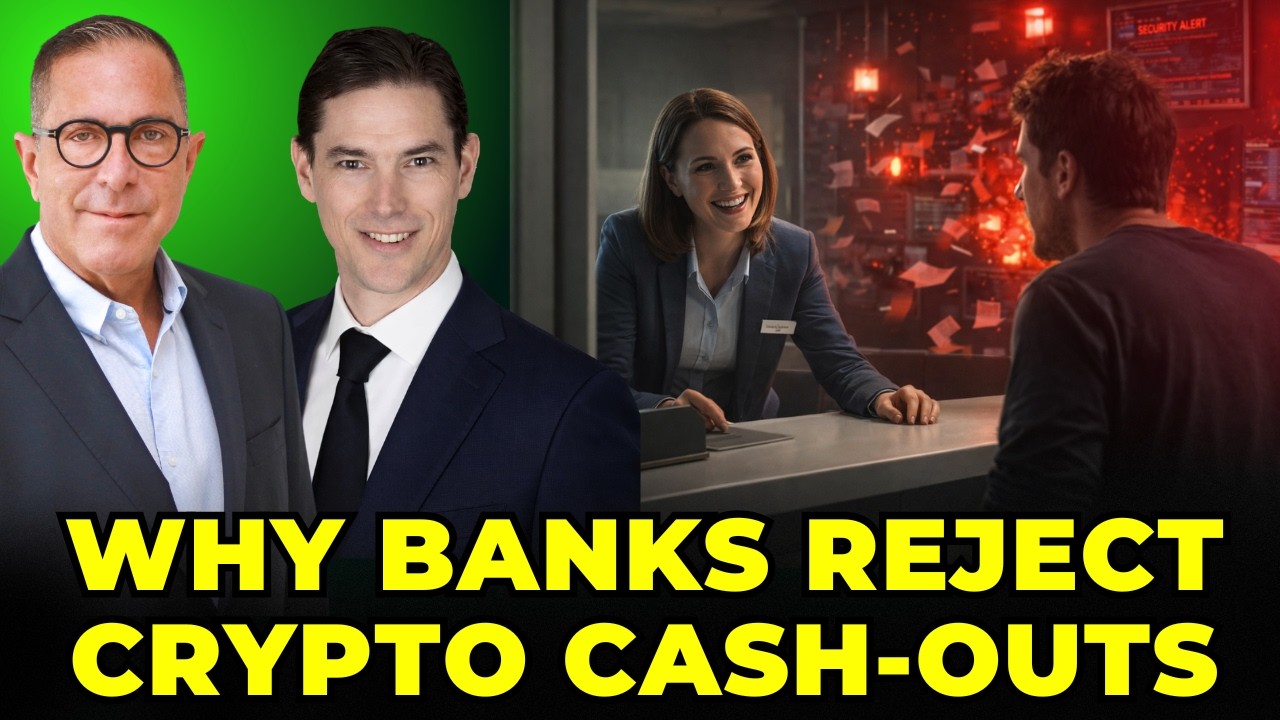
Cashing out in 2026

Making it happen safely, securely and legally
In March 2026, a fascinating ‘meeting of minds’ took place online, bringing together two of the world’s leading lights in the rapidly-evolving sphere of crypto, compliance and tax.
In an insightful hour of conversation and revelation, Hugo Leijtens of Cense sat down with Clinton Donnelly, founder of CryptoTaxAudit to discuss how best to bring the benefits and rewards of crypto investments into the real world by cashing-out safely, securely – and legally.
Since then, the webinar has become a viral hit in the crypto, investing and compliance communities, racking up over 16,000 views since its debut. You can see it for yourself in full on YouTube, and get an edited and summarised flavour of the discussion right here…
Clinton Donnelly:
A lot of people make mistakes when they cash out with their crypto. A lot of times they will run their crypto through a variety of transformations into other coins before they take it to Coinbase to cash out. And this just generates suspicious trading behaviour… and capital gains that they may not realise.
Part of the challenge we have is being able to identify the source of coins. What was the original cost basis of these coins? How do we report wallet transfers?
When you cash out, you just want to make sure you do it in such a way that you’re able to explain where your assets came from. You may need professional help to do it, which is one of the things we do at CryptoTaxAudit. So how can Cense help somebody off-ramp their money into a bank?
Hugo Leijtens:
Anti-money laundering, compliance and tax compliance are all sides of the same coin. So tax compliance is super important, before you get big fines. And anti-money laundering compliance makes sure that whatever you bring into the system is clean money.
We’ve done our own analysis and we see that less than 5% of people working with crypto actually have criminal intent. That means that 95% of the people, including you and me, are normal people, just with a difficult portfolio. Now, this is where we come in.
One of the things that we do is called ‘proof of wallet’ and this allows a bank to cryptographically understand that the wallet that you say is yours is actually yours. We have the ability to translate source of wealth from pure data into a normal tax [and financial] storyline… and this allows a bank to remove the friction and say, ‘Hey, you’re welcome to bank with us.’
Clinton Donnelly:
So this way the bank officer knows that you that you provided documentation, so he can say, ‘Okay, I have some credible evidence that the source of wealth here is legitimate. And so I can approve the receipt of that.’
Now the, once that’s been done, then the taxpayer would transfer his funds to the bank. At this point in time, the transaction – because it’s a large amount – would be intercepted. The compliance officer would bless it, and the funds land in this bank account. That’s what we’re trying to make sure happens successfully.
Hugo Leijtens:
The beauty of it is that you don’t have to send your money to a third party intermediary. You can send it straight from Coinbase to your bank account because that money will be cleared. So there’s no step ‘in between’, where you need to trust a third party with your funds.
You only need to trust a third party – Cense – with your data. And on top of that, we’re [built out of] Glassnode, so you know us. The business model of Cense is fully based on getting you banked. We don’t keep your data, we don’t do analysis on your data. That’s not what we do. What we do is provide an anonymous crypto report with which the bank can make a determination [on whether to onboard your funds].
Clinton Donnelly:
One of the challenges some of my customers have had is large tax bills. They’ve been trading, not necessarily cashing out, and now they need to pay the tax bill on the gains that they’ve experienced, and they have to move hundreds of thousands of dollars to the IRS and there’s all sorts of restrictions on this.
The bank’s gonna ask all the questions that we’ve been discussing about source of funds… a whole slew of questions that people don’t realise. The banks are literally terrified of money laundering complications. And that’s why all of this is so important. That’s why everybody needs to have a strategy for when you start to do your big cash out.
Hugo Leijtens:
If you talk to the people inside the bank, it’s also understandable why they’re so risk averse. So the challenge with criminal money flows is that it actually has a very hefty impact on society… and the banks are the gatekeepers that can protect us from that impact.
Now when we add the crypto side in there, the banks don’t have the tools. They do everything manually. A lot of these funds flow in and they need to make a decision within five minutes to accept or reject this money. And then in five minutes, you need to be able to go through a history of somebody with 10,000 to 100,000s of trades. This is part of the reason why they just bluntly say ‘no’.
Clinton Donnelly:
The anti-money laundering rules make banks do crazy things. It’s just simply the way it is, you can’t change it. You’ve just gotta work within the process. You don’t want to lose your bank account. Next question. How do you track wallets that have been closed for years?
Hugo Leijtens:
This is a very good question. So this is the question that we got from every single bank. How do we know that the wallet that the user is providing are all the wallets that user has or had? So we have built comprehensive algorithms to be able to calculate those wallets that you forgot at the back of your portfolio.
So for example, in our portfolio-based approach, we will see gaps in your data profile. And we have the algorithms in the background that run in order to fill up those gaps and make sure that we complete the story.
Watch the webinar
Discover how banks handle crypto transfers, why accounts get flagged or closed, and what you need in place before moving funds.