A7A5: inside Russia’s emerging blockchain financial infrastructure

Facing sweeping international sanctions, Russia has increasingly turned to alternative payment infrastructure to sustain cross-border financial activity. One of the key components of this effort is A7, a payment network that has reportedly processed tens of billions of dollars in international transactions, including payments linked to Russia’s defense procurement.
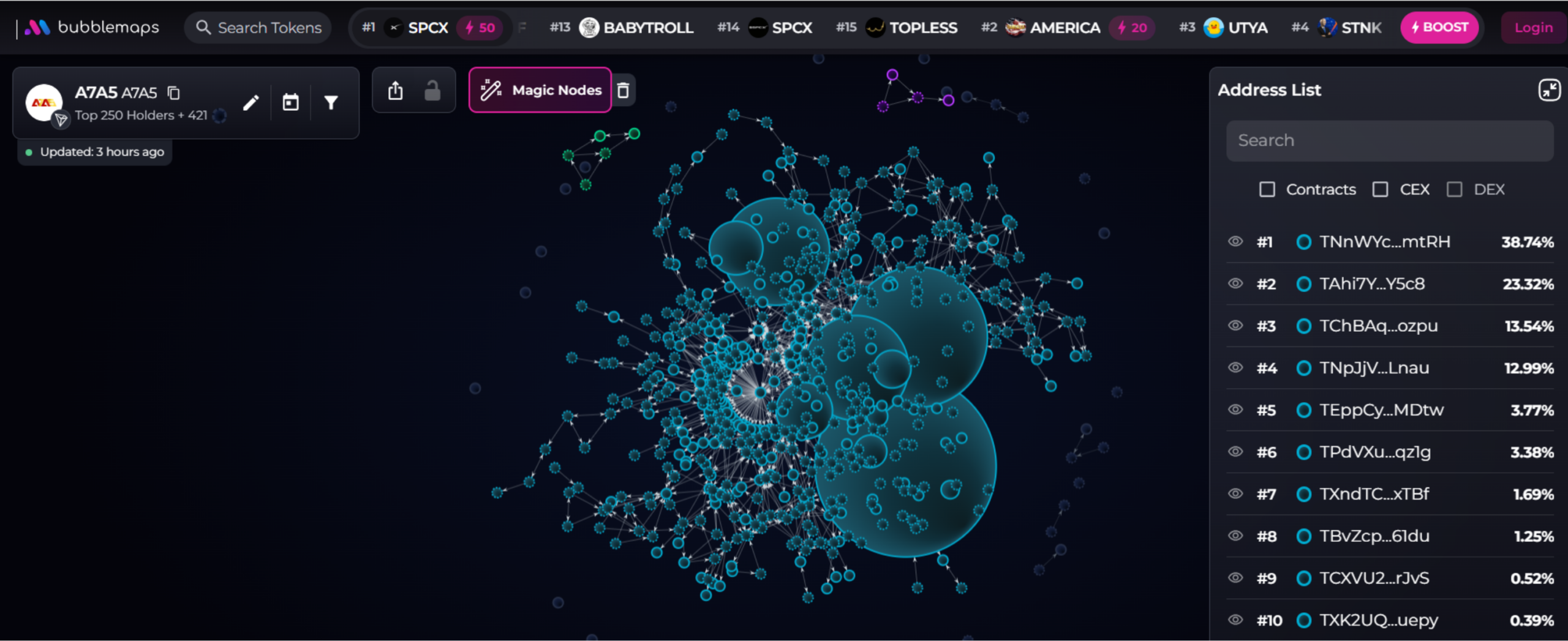
At the center of this ecosystem is A7A5, a ruble-backed stablecoin operating on the public Ethereum and TRON blockchains. Like well-known dollar-pegged stablecoins such as USDT and USDC, A7A5 is designed to maintain a stable value by backing every token with reserve assets. In this case, Russian rubles.
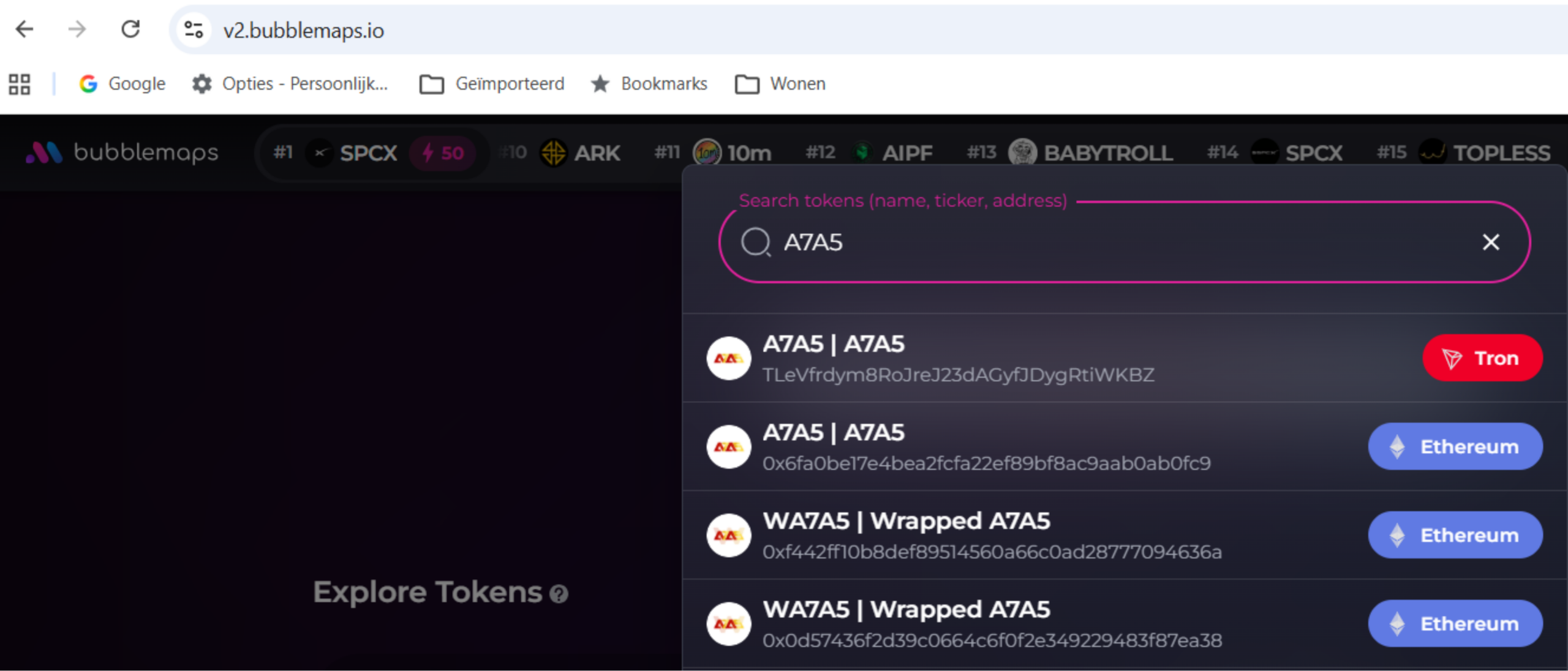
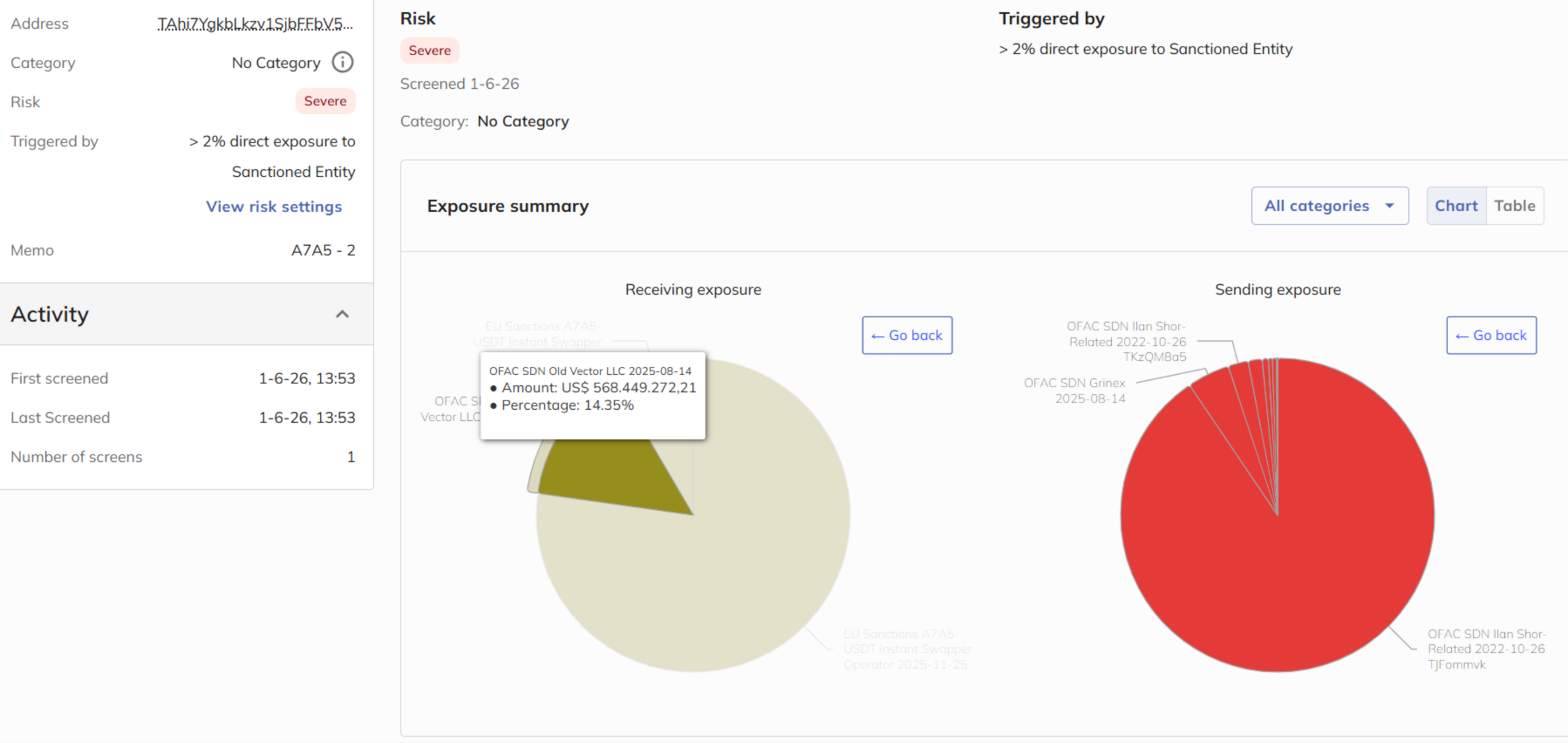
According to Western investigative reports, these reserves are linked to Promsvyazbank (PSB), a Russian bank sanctioned by Western governments because of its close ties to Russia’s defense sector. The A7 network also relies on corporate structures established outside Russia to reduce sanctions exposure. One prominent example is Kyrgyzstan, where the issuance of A7A5 tokens is handled by the fintech company Old Vector LLC. The sanctioned Moldovan businessman Ilan Shor has likewise emerged as a key figure within the wider A7 ecosystem.
How the value flows
A7A5 serves as a bridge between Russia’s domestic financial system and the global cryptocurrency market. This process typically follows these steps:
- A Russian company holds funds in rubles.
- Those rubles are transferred into the A7 network.
- In exchange, the company receives A7A5 tokens.
- The tokens are transferred to cryptocurrency exchanges or OTC brokers.
- The A7A5 tokens are exchanged for USDT or another liquid cryptocurrency.
- The newly acquired cryptocurrency is transferred across international blockchain networks.
- In the destination country, the funds are converted into local fiat currency or used directly for commercial payments.
From a financial intelligence perspective, the critical stage is the conversion of rubles into A7A5 and subsequently into USDT. Once converted into USDT, value can move rapidly through exchanges, OTC brokers and private wallets, making attribution substantially more difficult. Rather than transferring funds directly from sanctioned Russian banks into globally accepted stablecoins, A7A5 introduces an intermediate settlement layer:
Rubles → A7A5 → USDT → international destination
By introducing this additional conversion step, the network can reduce the visibility of sanctioned financial flows within compliance screening while preserving access to international blockchain liquidity.
A7A5 also allows users to temporarily hold value in rubles without relying on the Russian banking system for every individual cross-border payment, providing greater operational flexibility while reducing direct exposure to sanctioned financial institutions.
Unlike conventional settlement tokens, A7A5 also incorporates an incentive for users to retain balances within the ecosystem. According to the issuer, token holders can earn passive income linked to the Russian Central Bank’s key interest rate, minus one percentage point. This effectively allows participants to earn a yield while holding digital ruble exposure.The yield mechanism encourages participants to retain A7A5 balances, increasing liquidity within the ecosystem before conversion into other assets.
The Role of Cryptocurrency Exchanges
Research by blockchain analytics firms including Chainalysis, TRM Labs, and Elliptic shows that several cryptocurrency exchanges play an important facilitating role in the A7A5 ecosystem.
The most significant include:
| Exchange | Trading pairs | Role |
|---|---|---|
| Grinex | A7A5/RUB, A7A5/USDT | Main historical liquidity venue. Until recently, Grinex was the principal marketplace for trading A7A5 against both the Russian ruble and USDT. The exchange emerged as the successor to the previously sanctioned Russian platform Garantex. However, its website grinex.io has been offline since April 30 following what Grinex described as a hack. |
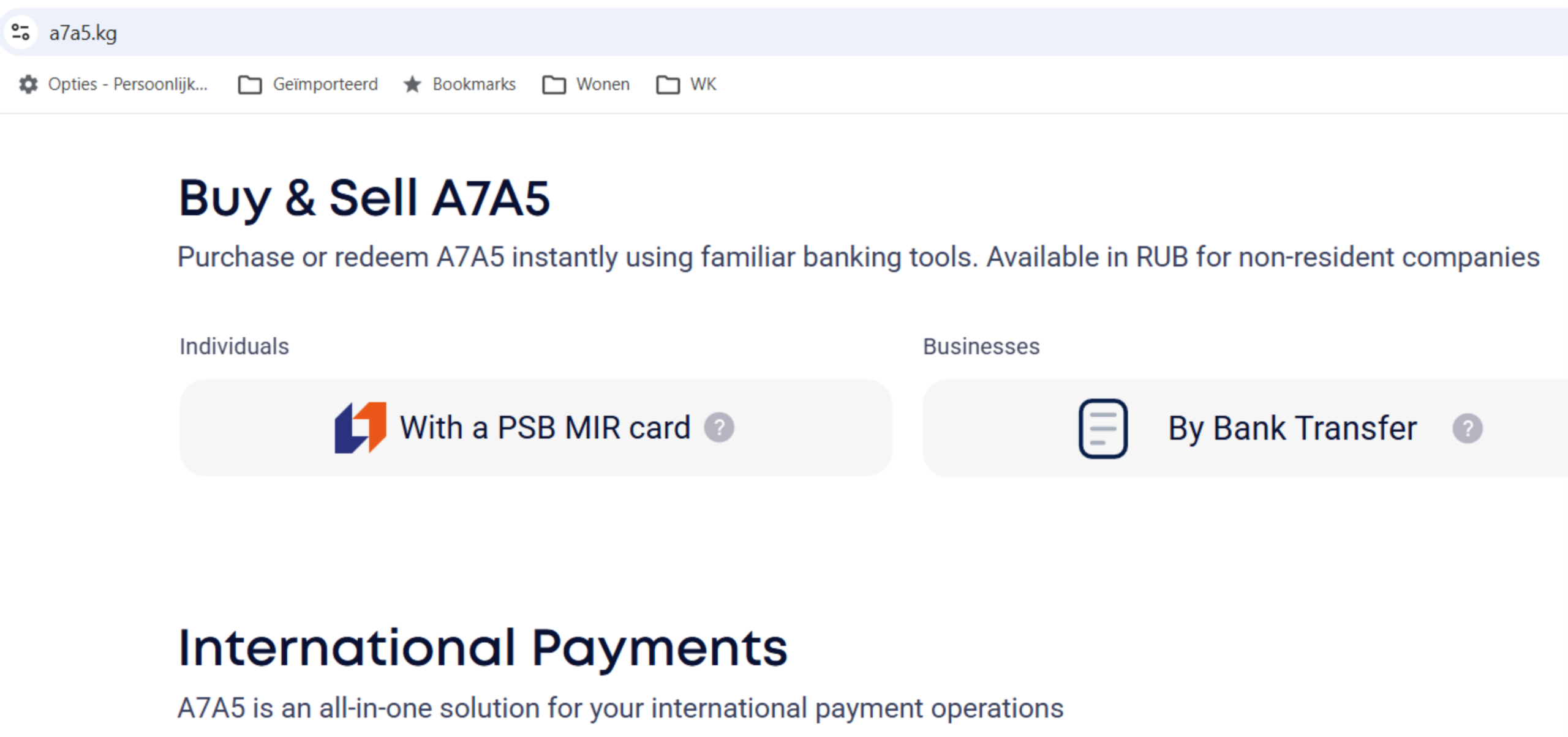
| A7A5 | A7A5/USDT | Official ecosystem exchange located in Kyrgyzstan. Registration requires an email address or a Russian mobile phone number. The platform (a7a5.kg) advertises both Russian bank transfers and international payment services. It also allows users to swap A7A5 for USDT and vice versa directly from/to self-custodial wallets. |
| Meer Exchange | A7A5/USDT | Additional liquidity. This Kyrgyz-based exchange continues to offer A7A5 trading despite Western sanctions. The platform (meer.kg) operates in both Russian and English and provides an active market for A7A5/USDT transactions. |
| DeFi | Various | The biggest decentralized exchange Uniswap recently blocked A7A5 trading (‘flagged as malicious’) but the token is still available on other decentralized exchanges such as Pancakeswap (pancakeswap.finance). Because DeFi platforms generally lack the customer due diligence procedures found on regulated platforms, they carry elevated compliance risks. |
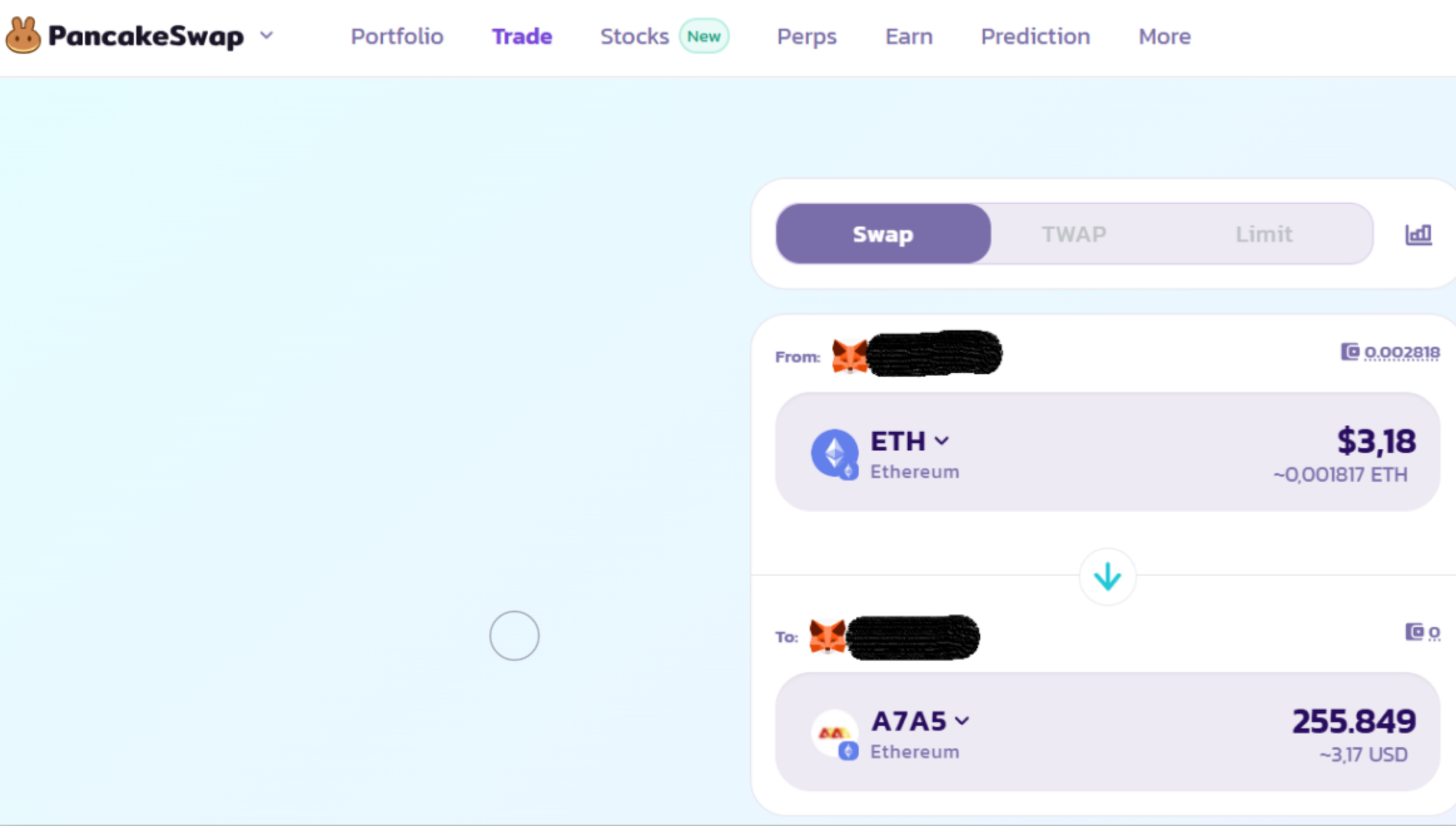
According to a recent report by the UK government the A7A5 ecosystem extends beyond dedicated Russian and Kyrgyz trading platforms. It accused the global cryptocurrency exchange HTX (formerly Huobi) of facilitating transactions connected to the A7 network. As a result, HTX was designated under UK sanctions, alongside the Polish exchange EXMO and several other Russian platforms, including Rapira and Aifory.
From the perspective of financial crime investigations, any transactions involving these platforms warrant heightened scrutiny. While the mere use of an exchange does not necessarily indicate illicit activity, their documented involvement in the A7A5 ecosystem makes them important points of interest for sanctions compliance and anti-money laundering (AML) investigations.
Assessment
Russia uses A7A5, among other purposes, to help sustain its war machine. It is a new type of stablecoin that is not primarily intended for retail users, but rather for enhancing geopolitical and financial resilience against sanctions. By converting rubles into A7A5 and subsequently into USDT, a shadow financial ecosystem is created that can partially circumvent traditional banking controls. Although blockchain transactions are inherently transparent, the use of multiple crypto exchanges, OTC networks, and foreign entities often makes it difficult to determine the true origin of funds. As a result, A7A5 should be regarded as a major red flag in compliance, sanctions, and AML investigations.


